


If you spend a decent chunk of your week in a professional setting, the pair of shoes in your wardrobe that gets the most wear-time probably isn't a heel, a sneaker, or anything too uncomfortable. Instead, it's gonna be a dress shoe or loafer. Specifically, that pair you keep reaching for on days when you want to look put-together, yet effortless.
It's hard to properly explain just how investment-worthy designer loafers can truly be until you own a good pair. Certain shoe styles can be dressed both up and down, and the classic loafer is a great example. Want to pair them with tailored trousers and a structured blazer? Works perfect. Want to dress up a pair of wide-leg jeans and your favorite slouchy jacket? Never fails. Looking for a practical shoe to pair with a slip dress and ankle socks? Look no further. A great pair of quality loafers will never let you down, no matter what you choose to style them with.
The reason the designer loafers in this guide are so worth the investment isn't about the label on the box. It's about what having a well-made shoe in your wardrobe can actually do for your personal comfort (and confidence). Over time, the full-grain leather will soften and mold perfectly to your foot. The sturdy, well-built soles will wear in beautifully instead of getting worn out. The smooth, polished silhouettes will always be timeless because they were never a passing trend to begin with.
That being said, it's time to take a walk in our shoes! Our team has broken down this guide to the best designer loafers into four style categories: the classics, statement looks, the transitional-season picks, and the great-for-everyday. Each section includes recommendations from varied luxury price points and a run-down of why they're worth taking for a spin.
This post contains affiliate links, which means we may earn a commission if you shop through them—no extra cost to you, just extra good taste.
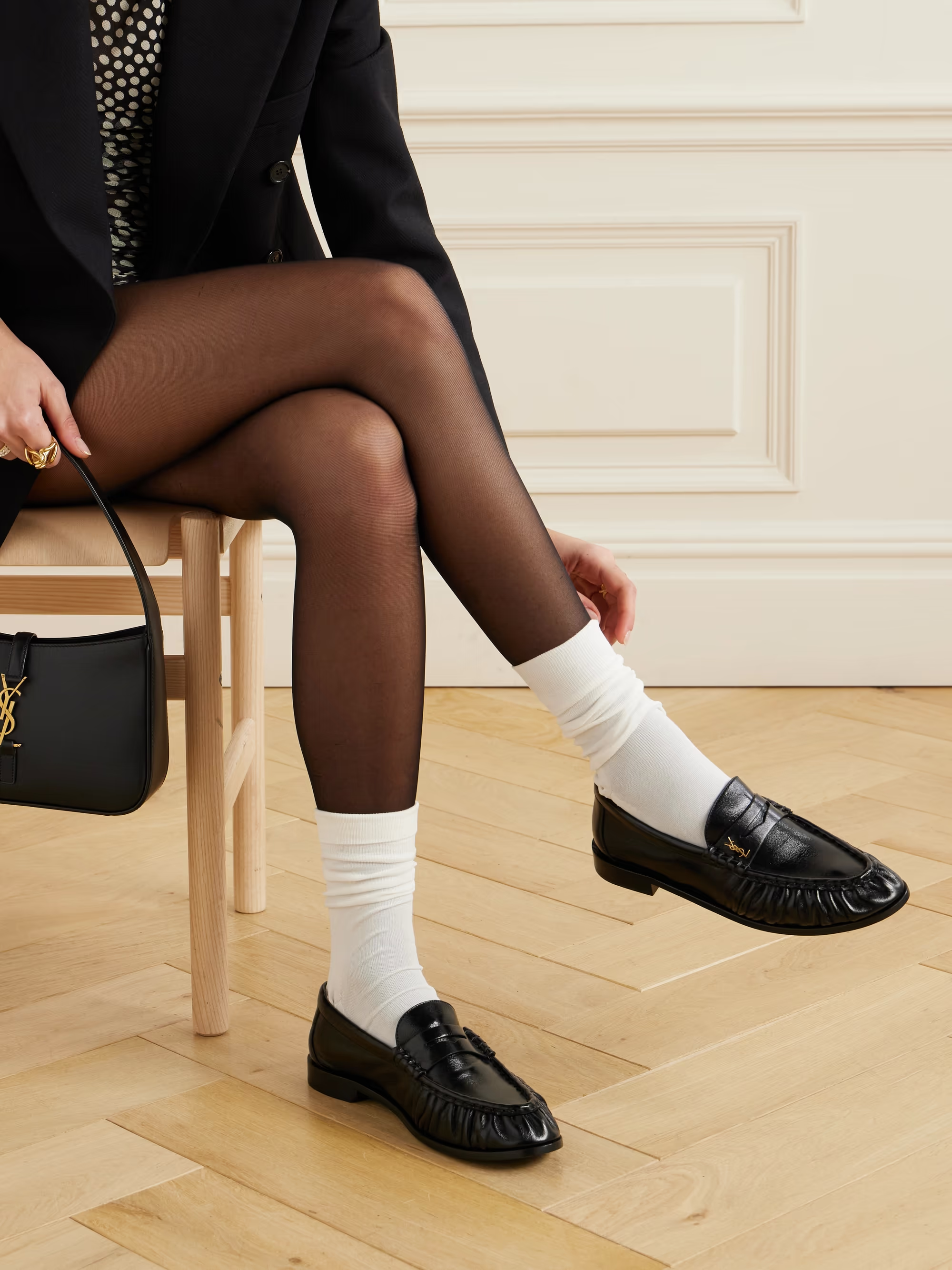
If you're brand-new to the world of designer loafers and only want to make one investment to start, the classics are a good place to begin. Not only because they're the safest choice, but because they've been fine-tuned over decades by luxury fashion professionals who care deeply about perfecting their art through craftsmanship. This means looking at classic loafer styles like the horsebit, the penny, the tassel, the driving moccasin. Each of these styles has a specific history and each one has been worn continuously long enough to prove they're not going anywhere.
Gucci's horsebit loafer is a good universally-recognized example. This style has been in production since the 1950s, which makes sense when you get to try on your first pair for size and fully begin to understand the fashion fixation. The heel height, the toe box, the weight of the gold hardware: it's all just right in a way that's difficult to articulate but immediately obvious. It's one of those rare designs that hasn't needed updating because there was nothing to update.
But the classics extend well beyond one house. Prada's classic triangle leather loafer and Tod's Gommino driving moccasin both qualify as classic designer pieces in the truest sense. They're not trying to make a moment. They're just good, and they make everything you style with them look better for it.
One practical note on shopping the classics: pay close attention to the leather specs. Full-grain calf leather is what you're looking for. It develops a patina with wear and ages in a way that cheaper materials don't, which tells you something real about how the shoe is constructed. If a listing just says 'leather upper' without more detail, that's worth investigating before you commit.
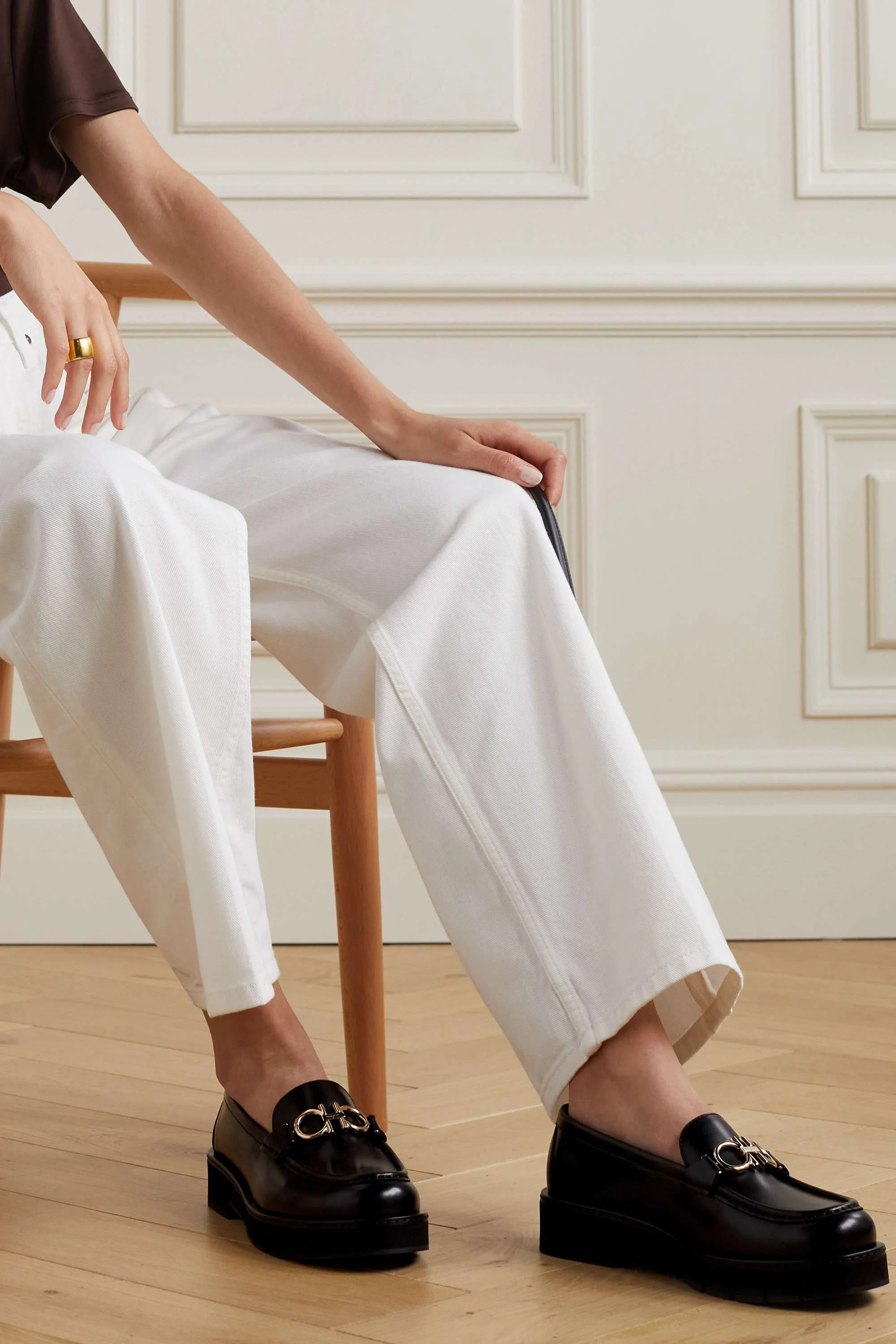
A good work loafer has a specific job to do. It needs to read professional without being stiff, hold up through a full day of meetings and city pavement, and still feel like a choice rather than a default. Designer loafers are genuinely well-suited to this because the silhouette is inherently neat: no platform, no embellishment fighting for attention, just a clean line from toe to heel that works with almost anything you'd wear to an office.
Whether you'll be at your desk or out at a nice dinner, a slim horsebit or accented penny loafer in black or dark brown leather is the most reliable formula. These styles pair with tailored trousers, midi skirts, and wide-leg pants equally well, and it won't require a second shoe change at the end of the day. If your workplace leans more creative, a slightly chunkier sole or a small heel can dress up the look a bit.
Comfort matters more than most people account for when buying work shoes. Look for leather or memory-foam insoles, a heel that's still low enough to walk comfortably for several blocks, and a toe box wide enough that your foot isn't under pressure. Ferragamo, Ralph Lauren, and Manolo Blahnik all make gorgeous and work-appropriate designer loafers with proper construction that actually supports a full day on your feet.
.avif)
There's a type of designer loafer that's specifically built for low-stakes days, and it's worth investing in separately from your work pair. The priorities shift: you want something that can handle cobblestones and a long afternoon on your feet that also looks good with jeans and doesn't need a pressed outfit to make sense. Driving moccasins, suede styles, and loafers with a more relaxed silhouette all fit in this category.
A casual loafer is also often where people feel free to experiment with color or texture they wouldn't risk at work. A tan suede pair, a loafer in a warm cognac or chestnut, a style with a slightly chunkier sole: these all fall into the territory of shoes that dress up or down depending on what you build around them. Wear them with dark jeans and a good coat for an easy weekend errand look, or with a midi skirt and a relaxed knit when you want something a bit more considered.
For weekend loafers, comfort is the main consideration after aesthetics. Look for styles with a flexible sole, a roomy enough toe box that you're not mentally tracking your feet after two hours of walking, and leather that doesn't require a full break-in period. Chloé and Miu Miu's loafer styles are two of the best in this regard: both are made to be worn casually and both feel good from the first time you put them on.
Suede deserves a special mention here. It's less formal than calf leather, wears more naturally with relaxed outfits, and ages beautifully if you take basic care of it. A suede protector spray applied before the first wear and a brush kept nearby for scuffs is genuinely all it takes. We've covered more on chic autumnal footwear if you want ideas on how to style suede loafers through the cooler months specifically.

For everyday wear, what you're looking for is a balanced loafer that's light enough that you stop noticing it by mid-morning, structured enough to hold its shape over years of use, and simple enough that it doesn't need a thought-out outfit to look classy. This is the shoe that will hold up in both stylishness and quality no matter where you choose to wear them.
A.P.C., Toteme, and Khaite are worth knowing well for this category. They each make luxury leather loafers that are specifically designed to disappear into an outfit while improving it. No logos, no signature hardware, nothing that announces itself. When you look back at photos from days you wore them, you just think the outfit looked good. That's the goal.
These brands also tend to hold up well over time in a way that matters if you're thinking about long-term value. They sit squarely in the category of classic designer pieces worth buying once and keeping, and their resale value reflects that. If you're going to spend real money on a loafer, it's reassuring to know it won't look foolish in three years.
One practical thing most people skip: get cedar shoe trees and actually use them. And if the soles eventually wear thin, a good cobbler can resole most quality loafers for far less than the cost of a new pair. A little maintenance extends a well-made shoe's life by years.
